Nazy Nazhand
The Artist is Always at the Epicenter of the
Creative Process
12.09.2026
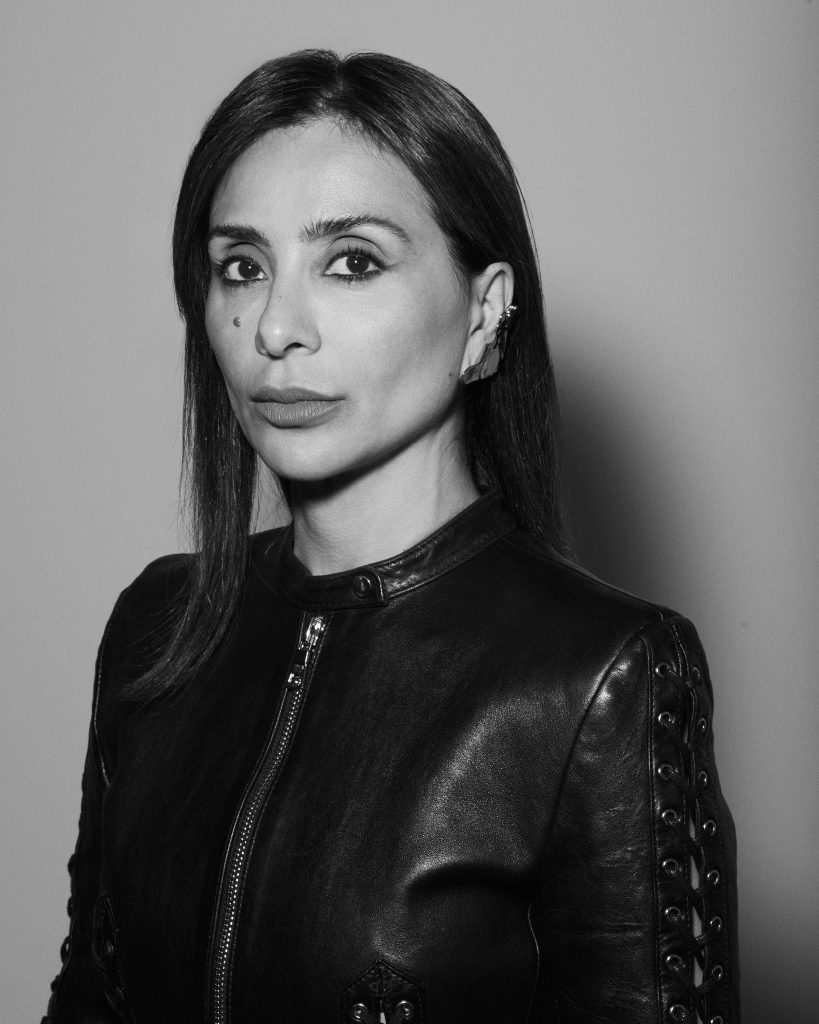
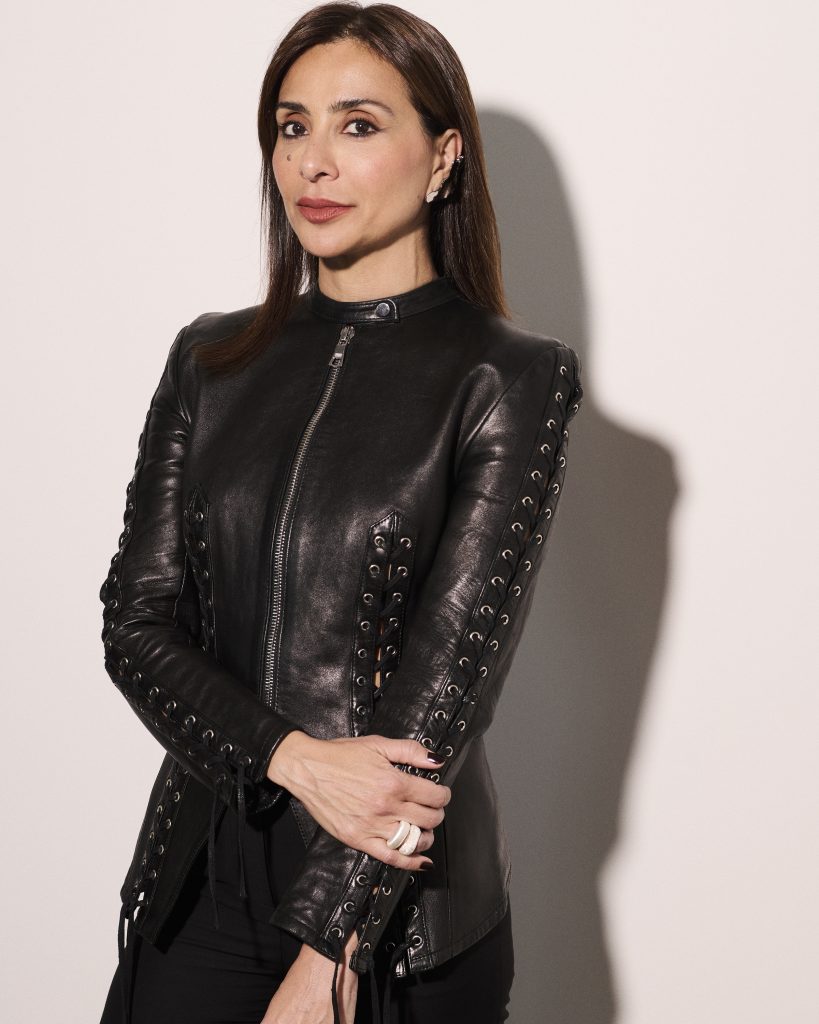
The contemporary art ecosystem is a complex and multilayered mechanism, where creative authenticity often collides with the strict commercial demands of the global market. Navigating this labyrinth is particularly difficult for emerging and independent artists. That is why the vision of professionals like Nazy Nazhand – a curator, art advisor, and a figure with two decades of industry experience – carries exceptional value. Her curatorial philosophy is profoundly artist-centric, rooted in the fundamental principle that the industry must be in service to the creator’s vision.
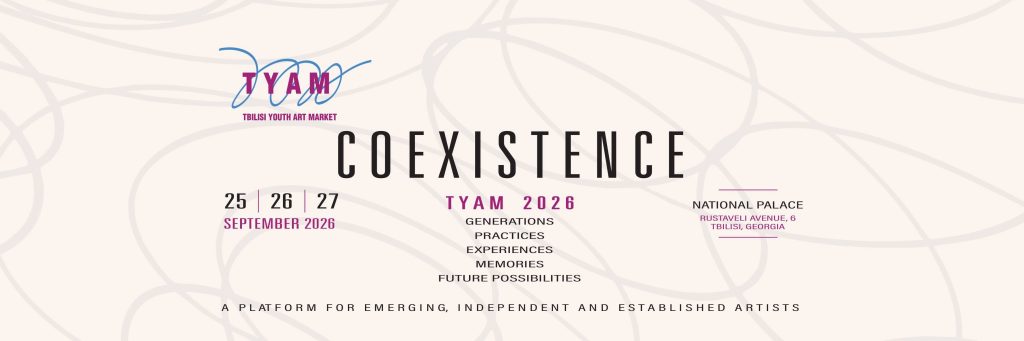
The central axis of our conversation is not only the broader artistic process but also a vital new initiative: TYAM – Tbilisi Youth Art Market. This platform is designed to support emerging and unrepresented artists, specifically focusing on young creators aged 17 to 25, as well as independent artists over 25 who are not affiliated with galleries. TYAM is dedicated to fostering accessibility, visibility, and meaningful professional connections for artists navigating the early and transitional stages of their careers. Such an open, educational, and dialogue-driven environment offers new talents a unique opportunity to directly engage with recognized industry leaders.
In this interview, Nazy speaks candidly about the invisible barriers artists face at the dawn of their careers, analyzes the transformation of traditional galleries in the digital age, and shares her perspective on why peer-to-peer mentorship among artists is more effective than any institutional support.
Your curatorial approach is often described as “artist-centric.” What does this mean in practice, and how do you manage to protect an artist’s creative authenticity from the commercial pressures of the global art market?
The foundation of my work – whether as a curator, advisor, or cultural strategist – revolves entirely around the role of the artist. I believe that all of us are in service to the artist’s work, regardless of whether the context is commercial or non-commercial. In practice, this means that every idea, executed project, or initiative is fundamentally driven by the artist’s vision and mission. We are not here to set the tone; on the contrary, they dictate the tone to us. Artists speak the truth, illuminating the uncomfortable subjects that society struggles to confront.
Market pressure is always present, but it is our responsibility as art professionals, journalists, and curators not to create unhealthy expectations. We shouldn’t oversimplify artistic practice, nor should we chase short, five-year cycles of success. Art is a long-term industry. David Hockney, for instance, who passed away recently, had a career spanning over seven decades, while artists like Louise Bourgeois, Etel Adnan and Carmen Herrera achieved recognition in their 70s and 80s. We must protect this longevity and resist forcing artists into narrow, restrictive frameworks.
As an art advisor, how do you view the process of value formation for an artwork? Beyond purely aesthetic characteristics, what determines the price and potential of a young, still-unknown artist’s work?
A professional must be able to separate their personal tastes from what is objectively valuable and significant. When I look at young, emerging artists, the very first thing I look for is productivity. The capacity for continuous work and an unwavering dedication to one’s practice is what separates an artist with a great future from the rest. There is a common misconception: “I’ll create work for an exhibition and then wait until I need to make more for a future show.” A long-term career is not built that way. You have to create constantly. That is what I look for – an uninterrupted creative process.
On the other hand, art collecting shouldn’t be treated like investing in real estate. If you are buying an artwork solely because you expect a quick financial return, you will inevitably be disappointed. Art is subjective. You are investing in the creator’s career, supporting an artist of your time, and choosing a piece that you genuinely want to live with.
When you are reviewing new talents and their portfolios, what is the key conceptual or technical detail that signals to you that this artist has the resources to build a long-term, stable career?
I look for scrupulous execution. That doesn’t mean absolute perfectionism; rather, I mean a highly precise connection between the idea and the visual outcome, a thoughtful conceptual approach, and the artist’s ability to articulate their own work.
However, I will be completely honest and say that this is quite an unfair demand. Society and the industry demand high quality, premium materials, and refined execution from artists, yet they fail to provide the necessary infrastructure to achieve it. To create, you need a studio, the financial resources to purchase materials, and an education. Even in New York, one of the most expensive cities in the world, artists are fighting an incredibly tough battle for survival.
Therefore, before we impose high demands on artists, we first need to discuss the foundational systems that enable them to work – whether that means residencies, affordable studio spaces, or flexible work schedules so they can support themselves alongside their creative practice.
What is the most common strategic mistake independent artists make in the early stages of their careers, and what is your main advice for avoiding it?
The worst thing you can do is perfectly copy someone else’s path. Just because a specific strategy brought someone else success doesn’t mean it will work for you. An artist must trust their own pace of development, their practice, and their vision. Overnight success does not exist.
The second major mistake is rejecting modernity. You often hear the advice: “Avoid social media.” That is absurd. We are children of our time, and rejecting technological progress is simply unprofessional. Social networks are a contemporary tool and should be utilized – provided you don’t become a victim to them.
I also dislike it when artists immediately adopt the role of a “disruptor” right out of the gate. Not everyone is required to shatter the system; it is often more important to expand existing models, question tired, outdated rules, and introduce truly original ideas.
სოციალური მედიისა და ციფრული პლატფორმების ეპოქაში, რამდენად შეიცვალა In the era of social media and digital platforms, how much has the role of the curator and the traditional gallery changed? Can an artist today be completely independent and still achieve international success?
The role has changed radically, and not acknowledging these shifts is incomprehensible to me. Every business must evolve and adapt to new technologies. The gallery model is a subject of constant debate. We were just recently discussing how Pace Gallery had to let go of 50 artists and 20% of their employees. This demonstrates that the current models – which worked 30, 20, or even 10 years ago – are no longer viable today.
I believe that in the future, artists will increasingly rely on managerial systems, much like in the entertainment industry, while maintaining full autonomy over their studios. When I founded Nazhand Art & Culture 10 years ago, I was driven by the belief that there are alternative, more holistic ways to engage with the contemporary art world – models where the artist is positioned at the center and collaborates across various disciplines.
An artistic career is often fraught with rejection and periods of crisis. How do you help the artists you work with overcome institutional barriers, and what is the primary support system they need during these times?
Rejection is a daily reality for everyone, but especially in the creative industry. It is simply the nature of the game. An artist needs to have a very thick skin while simultaneously maintaining absolute vulnerability, sensitivity, and openness; otherwise, the creative process cannot exist. It’s a difficult dichotomy.
As for my role in this process, the best thing I can do is be an advocate. To serve artists and help them navigate the business infrastructures that are essential for realizing projects or placing their work into collections.
What role does local cultural identity play in an artist’s work when they are trying to break into the international arena? Is it necessary to adapt to global trends?
I’d like to recall the words of one of my favorite artists, Lynette Yiadom-Boakye who is British-Ghanaian. When asked if her works were political, she replied that she doesn’t need to create political art because simply being there, standing in the room, and showing her work is already a political statement. I always keep that approach in mind. Your identity, local context, and social background will inevitably be reflected in your work, and we should embrace that.
In 2010, I launched ART MIDDLE EAST, a cultural initiative to promote emerging voices from the region in New York and beyond. But I knew when to stop. Continuing to do the exact same thing years later would have meant we hadn’t progressed.
Regarding the international arena – there is absolutely no obligation to adapt to a global narrative or dilute your work just to make it easily digestible for foreign markets. On the contrary, the art that captures the world’s attention is precisely what is deeply personal. Shirin Neshat’s work is about Iranian women, yet her voice resonates globally. The personal always finds its way to a global audience.
The art ecosystem is constantly transforming. From your perspective, what will be the biggest challenge independent artists will face over the next 5-10 years?
Economics and the cost of living. We can speak philosophically about technology and politics, but the fundamental problem is financial. It is imperative that infrastructure is created so artists aren’t forced to put unrealistic prices on their work, which ultimately leads to market stagnation. The current art fair model is expensive and in crisis; it is damaging the gallery business by forcing them to only exhibit easily salable works. This robs young artists of the exposure they deserve and directly harms their long-term prospects.
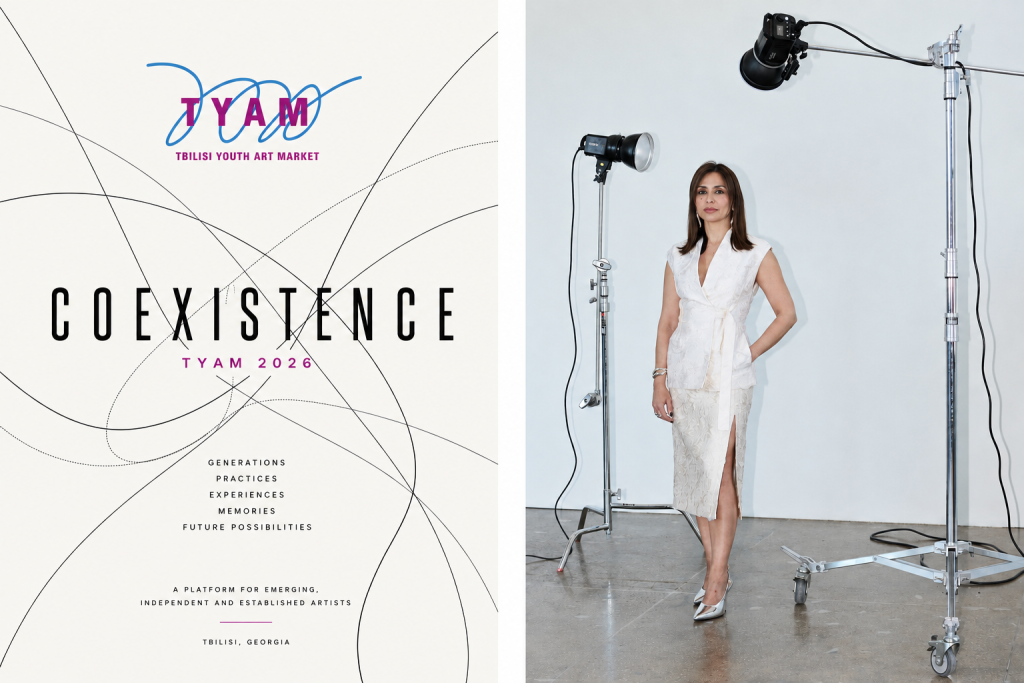
TYAM is specifically designed for young creators aged 17-25 and independent artists over 25 who lack gallery representation. How does the mission of this platform resonate with your personal curatorial philosophy, and why is the existence of such alternative, non-institutional spaces so critical?
This mission is in perfect alignment with my philosophy, and it is a tremendous honor to be part of this process and to come back to Tbilisi. The value of TYAM’s concept is that it assists artists at the earliest, most critical stage of their careers – when they are still trying to figure out if they truly want to walk this difficult path. Institutions often only extend support to artists who are already established. TYAM, conversely, creates a space to discuss economic challenges, share practical advice, and, most importantly, facilitate “artist-to-artist” interaction. As much as we professionals want to help, peer mentorship and the coexistence of ideas among artists is the most powerful driving force.
One of the primary focuses of this program is the transfer of practical knowledge – from building professional relationships to effectively presenting finished works. What is the most important practical skill or strategy that you plan to share with young talents at this event?
I could reiterate the importance of high-quality execution and productivity, which are undeniably essential practical skills. But I’ll be honest: they shouldn’t get the most important practical advice and strategies from me, but from each other. Bringing creators of different generations and experiences together in one space creates a unique platform for idea exchange, where the most valuable and practical knowledge is truly born.
TYAM is viewed as a long-term investment in talent and the empowerment of the art community. In your opinion, what is the essential next step a young artist should take after the experience gained from this platform in order to successfully integrate into the broader art ecosystem?
The very first step is putting this new access and knowledge into practice. However, I cannot and will not make strict predictions in advance about exactly how things should unfold. I love observing the process, so I am eagerly looking forward to being on-site to see how this project comes to life, how it evolves organically, and what the major discoveries will be. One thing I know for sure: this is an incredibly valuable mission that is truly worth pursuing.
Interviewed by Ketia Belkania